
After You Pass
Night Driving and Adverse Weather: A Guide for New Drivers
Driving after dark and in poor weather conditions are two of the biggest challenges new drivers face. This guide covers headlight use, stopping distances, skid prevention, and how to stay safe when conditions change.
6 min read
New drivers pass their test in ordinary conditions — usually daylight, dry roads — but then immediately face the full range of real-world conditions on their own. Night driving and adverse weather are statistically the most dangerous environments for new drivers, and the ones they are least prepared for.
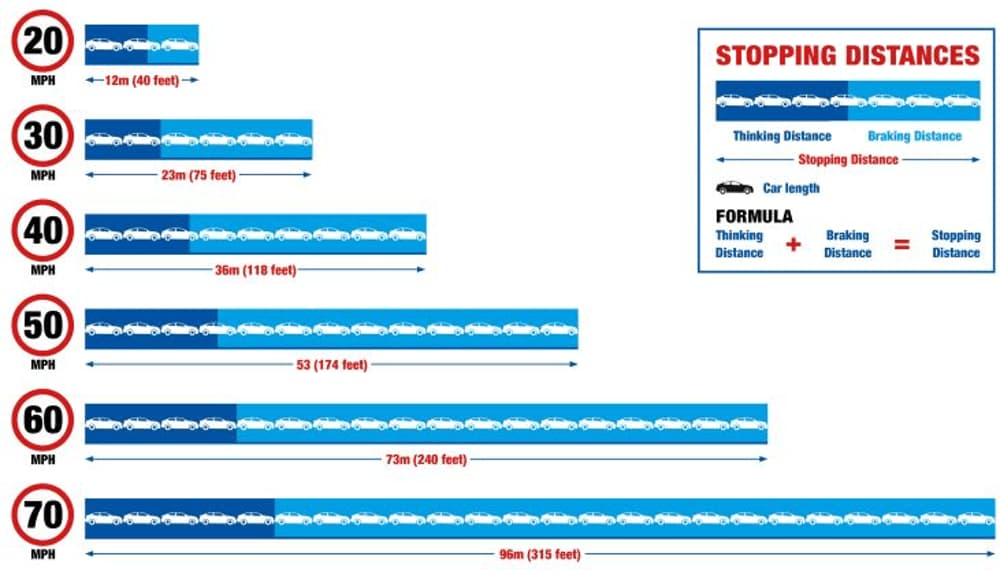
The key principle for both: your speed must always allow you to stop within the distance you can see to be clear. At night or in fog, that distance shrinks dramatically — and so must your speed.
Night Driving
Driving after dark is not simply driving in less light. Depth perception changes, peripheral vision narrows, hazards are harder to spot until they are close, and fatigue becomes a genuine factor on longer journeys. Understanding what changes — and adjusting accordingly — is what separates a confident night driver from a nervous one.
Headlights
When to use full beam
Full beam (main beam) doubles your visible range and should be used on unlit roads whenever there is no oncoming traffic and no vehicle ahead of you. Many new drivers never switch to full beam and significantly reduce what they can see.
When to dip
Switch to dipped headlights when you see oncoming headlights, when following another vehicle, or when entering a lit area. Dip early — waiting until you are alongside an oncoming car means you have already dazzled them.
Being dazzled
If oncoming headlights dazzle you, slow down and focus on the left-hand edge of the road rather than looking directly at the lights. Do not flash your headlights at drivers with full beam on unless you are certain they have not seen you — a momentary dazzle of your own can cause more danger.
Speed and Stopping Distance at Night
On dipped headlights, you can see roughly 30 metres ahead. At 60 mph your stopping distance is 73 metres — more than double what your headlights illuminate. This means driving at 60 mph on dipped beams on a dark road puts you beyond your stopping distance for anything that appears in your headlights. Reduce your speed to match your visibility.
Other Night Driving Tips
- ✓Keep your windscreen and mirrors clean — smears scatter light and worsen dazzle significantly
- ✓Use rear fog lights only in fog or heavy snow — not in rain or light mist
- ✓Watch for cyclists, pedestrians, and animals — they are much harder to spot at night
- ✓On bends, slow down before the bend — your headlights point straight ahead, not around the corner
- ✕Driving on sidelights only in darkness — sidelights are not for driving, only for parking
- ✕Leaving full beam on through a lit town or village — unnecessary and dazzling to other road users
- ✕Forgetting to turn rear fog lights off when visibility improves — dazzles the driver behind
- ✕Driving faster than your headlights — the most common night driving mistake
Driving in Rain
Rain is the most common form of adverse weather UK drivers encounter. The primary effects are reduced visibility, increased stopping distance, and reduced tyre grip — all of which require the same response: slow down and increase your following distance.
What changes in rain
- ✓Stopping distance roughly doubles on a wet road compared to dry
- ✓Apply the 4-second rule instead of 2 seconds following distance
- ✓Use dipped headlights in heavy rain — helps others see you
- ✓Brake gently and progressively — harsh braking on wet roads can cause skids
Aquaplaning
At speed on standing water, your tyres can lose contact with the road surface — you are effectively floating on a film of water with no grip. If this happens, ease off the accelerator gently, hold the steering wheel straight, and do not brake until the tyres regain contact. It usually lasts only a second but feels alarming. The best prevention is appropriate speed for the conditions.
Use rear fog lights only when visibility drops below 100 metres — roughly the length of a football pitch. In heavy rain that does not meet this threshold, leave them off. They dazzle the driver behind and mask your brake lights.
Driving in Fog
Fog is the most dangerous weather condition for drivers. Crashes in fog tend to be high-speed multi-vehicle collisions because drivers rely on the car in front as a guide rather than judging safe stopping distance themselves. The car in front cannot stop any faster than you can.
In fog
- ✓Use front and rear fog lights when visibility is below 100 metres
- ✓Slow to a speed where you can stop within your visible distance
- ✓Do not follow the car ahead at a fixed distance — judge your own safe gap
- ✓Use windscreen demisters and wipers to keep your view as clear as possible
- ✓Listen as well as look — open a window slightly at junctions
Common mistakes
- ✕Using full beam in fog — reflects back off the fog and reduces visibility further
- ✕Driving at normal speed because the car in front seems to be managing it
- ✕Not turning fog lights on because fog appears to thin — then thickens again
- ✕Forgetting to turn fog lights off when visibility improves beyond 100 metres
Ice and Snow
In icy conditions stopping distances increase by up to ten times compared to dry roads. On snow, grip is unpredictable and can disappear suddenly. The fundamental rule is simple: if you do not need to drive, do not. If you must drive, everything about how you use the car changes.
How to drive on ice or snow
- ✓Move off in a higher gear (2nd or 3rd) to reduce wheel spin
- ✓Accelerate, brake, and steer gently and progressively — no sharp inputs
- ✓Leave a much larger gap to the vehicle in front — 10× the normal stopping distance
- ✓Slow down well before bends, junctions, and hills
- ✓If you feel skidding beginning, ease off all inputs and steer gently to correct
Black ice
Black ice is a thin, transparent layer of ice on the road surface — invisible until you are on it. Warning signs: the road looks slightly wet but other surfaces (pavements, grass) are dry and frozen; your tyres suddenly go quieter (less road noise means less grip).
If you hit black ice, do not brake or steer sharply. Ease off the accelerator, hold the wheel steady, and allow the car to pass over it.
Before you set off in winter
Clear all snow and ice from every window, mirror, and light — not just a small patch on the windscreen. Clear the roof too: snow sliding onto your windscreen while driving is dangerous and snow falling from your vehicle onto another road user can result in prosecution. Allow extra time to reach your destination and let someone know your route on longer journeys.
Electric Cars in Adverse Conditions
Electric vehicles behave largely the same as petrol cars in adverse weather, but there are a few things worth knowing before your first winter in an EV.
Range reduction in cold weather
Cold temperatures reduce battery capacity — typically by 10–20% in mild cold, more in severe frost. This is normal. Plan journeys with this in mind and charge to a higher level in winter. The battery management system warms itself before use if you pre-condition the car while still plugged in.
Regenerative braking on ice
Regenerative braking applies a braking force when you lift off the accelerator. On icy roads this can cause the rear wheels to lock. Many EVs automatically reduce regenerative braking in slippery conditions, but be aware of this and use regen gently. If in doubt, use a lower regen setting.
Instant torque on slippery surfaces
Electric motors deliver full torque instantly. On wet or icy roads, applying full power from a standstill can cause wheel spin even if the car has traction control. Accelerate gently from junctions and roundabouts in poor conditions.
Related Guides
Pass Plus
Pass Plus is a 6-hour post-test course covering motorways, rural roads, night driving, and all-weather conditions. Here's whether the cost is justified.
Motorway Driving for New Drivers
Most new drivers find motorways daunting. This guide covers lane discipline, safe following distances, joining and leaving, smart motorways, and what to do if something goes wrong.
Driving an Electric Car
How driving an electric car differs from a petrol or diesel — regenerative braking, instant torque, one-pedal driving, and why an EV is one of the best cars to learn in.
Ready to get started?
Automatic electric driving lessons on the Wirral — one-to-one with a qualified ADI.
Book a Lesson