
After You Pass
Rural Roads: A Guide for New Drivers
Country lanes, national speed limit roads, farm vehicles, animals, blind bends, and passing places — rural roads are where new drivers are most likely to be caught out. This guide covers everything you need to know.
6 min read
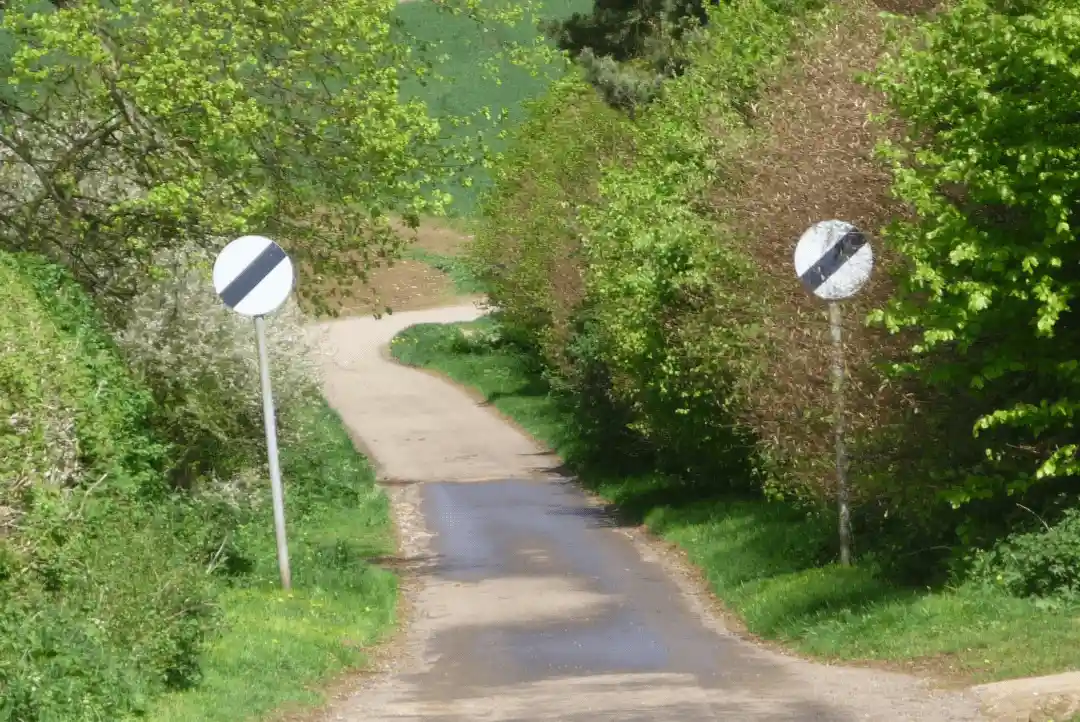
Rural roads are responsible for more than half of all road deaths in the UK, despite carrying far less traffic than urban roads. The combination of high speeds, narrow lanes, hidden hazards, and a false sense of freedom catches out new drivers more than almost any other environment.
The core challenge: rural roads look empty and feel fast, but hazards — bends, junctions, farm entrances, cyclists, animals — appear with very little warning. Speed that feels reasonable on a clear straight becomes dangerous the moment the road curves or narrows.
Speed Limits on Rural Roads
The national speed limit on a single carriageway road is 60 mph. This is a legal maximum, not a target. Whether 60 mph is actually safe depends entirely on the road ahead — its width, bends, surface condition, visibility, and what might be around the next corner.
60 mph
Single carriageway
National speed limit applies where you see the white circle with a diagonal stripe. On rural single carriageways this is 60 mph — but road conditions often demand much less.
70 mph
Dual carriageway / motorway
The same national speed limit sign means 70 mph on a dual carriageway or motorway. The road type determines the limit, not just the sign.
Posted limit
Villages and junctions
Speed limit signs on rural roads into villages (often 30 or 40 mph) can appear with very little warning. Watch for them on the approach to any settlement.
Bends and Limit Point
The limit point is the furthest point on the road that you can see clearly — where the two sides of the road appear to meet. On a straight road it is far ahead. On a bend it moves toward you. Your speed should always allow you to stop within the limit point.
Limit point is moving away
As you go through a bend and the limit point moves further ahead, the road is opening up — you can gradually increase speed as visibility improves.
Limit point is coming toward you
If the limit point appears to move closer, the bend is tightening or your speed is too high. Slow down. Never go into a bend faster than you can stop within what you can see.
On rural roads, always position slightly left of centre on blind bends — never drift toward the centre line. Oncoming vehicles, cyclists, or horses can appear in the middle of the road with no warning. A small positional buffer can be the difference between a near miss and a collision.
Narrow Lanes and Passing Places
Many rural roads — particularly in areas like the Wirral peninsula — are single-track: too narrow for two vehicles to pass side by side. Passing places (usually marked with a white diamond sign or a small layby) exist so that vehicles can pull in and let oncoming traffic pass.
Rules for passing places
- ✓If the passing place is on your left, pull into it to let oncoming traffic pass
- ✓If it is on the right, wait opposite it so the other vehicle can use it
- ✓Never park in a passing place — they must remain clear for traffic
- ✓If someone flashes their headlights, they are telling you to proceed, not challenging you
General narrow lane approach
- ✓Slow right down — you need time to react to oncoming traffic around corners
- ✓Sound your horn on blind bends where you cannot see far ahead
- ✓Be prepared to reverse to the nearest passing place if you meet another vehicle
- ✓Watch the verge — it may be soft and you could sink in if you pull over too far
Hazards Unique to Rural Roads
Farm vehicles
Tractors, combine harvesters, and other agricultural machinery move slowly and are very wide. Do not overtake unless you can see a long, clear straight ahead — these vehicles are much longer than they appear from behind. Be patient. Farm traffic has as much right to use the road as you.
Animals on the road
Sheep, cattle, horses, and deer all appear on rural roads. Slow to a crawl and stop if necessary. Do not sound your horn near horses or livestock — it can cause them to bolt. Wait until the road is clear before proceeding. On the Wirral, horse riders are particularly common on rural lanes.
Mud on the road
Farm vehicles deposit mud, straw, and debris — particularly at field entrances. Mud on tarmac is as slippery as ice and appears without warning. Slow down past any farm entrance and treat mud on the road as a serious hazard. Report large mud deposits to the local council if they create a danger.
Hidden junctions and farm entrances
Rural roads can have unmarked junctions and field entrances with no warning signs. Vehicles can emerge from these at any point. This is another reason why rural road speed should always allow you to stop within your visible distance.
Cyclists and horse riders
Pass cyclists and horse riders wide (at least 1.5 metres) and slowly. For horses, slow right down to walking pace — they can be unpredictable even with experienced riders. If a horse becomes skittish, stop the car and turn the engine off if asked.
No street lighting
Rural roads outside of villages have no street lighting. At night this means full beam is essential, but you must dip for oncoming vehicles. Hazards that are obvious in daylight — potholes, sharp bends, animals — are invisible until your headlights reach them.
Overtaking on Rural Roads
Overtaking is the highest-risk manoeuvre on rural roads and is responsible for a disproportionate number of serious collisions. The temptation to overtake a slow-moving vehicle on an open straight is understandable — but the margin for error is very small.
Before you overtake
- ✓You need a long, completely clear straight — enough to accelerate past and pull back in before any oncoming vehicle reaches you
- ✓Check mirrors, signal right, check mirrors again before pulling out
- ✓Make sure no vehicle behind you is also overtaking
- ✓If in any doubt, do not go. Wait for a better opportunity
Never overtake
- ✕On or approaching a bend — you cannot see oncoming traffic
- ✕Near a junction, farm entrance, or road marking that restricts overtaking
- ✕Where there are double white lines in the centre of the road
- ✕When you would have to exceed the speed limit to complete the manoeuvre
Related Guides
Night Driving & Bad Weather
Driving after dark and in poor weather are the biggest challenges new drivers face. Headlights, stopping distances, fog, ice, aquaplaning, and how electric cars behave in cold conditions.
Motorway Driving for New Drivers
Most new drivers find motorways daunting. This guide covers lane discipline, safe following distances, joining and leaving, smart motorways, and what to do if something goes wrong.
Pass Plus
Pass Plus is a 6-hour post-test course covering motorways, rural roads, night driving, and all-weather conditions. Here's whether the cost is justified.
Ready to get started?
Automatic electric driving lessons on the Wirral — one-to-one with a qualified ADI.
Book a Lesson