
After You Pass
Dual Carriageways: A Guide for New Drivers
Dual carriageways sit between A-roads and motorways — faster, busier, and less forgiving than anything you drove on test. Joining, lane discipline, overtaking, and leaving safely.
5 min read
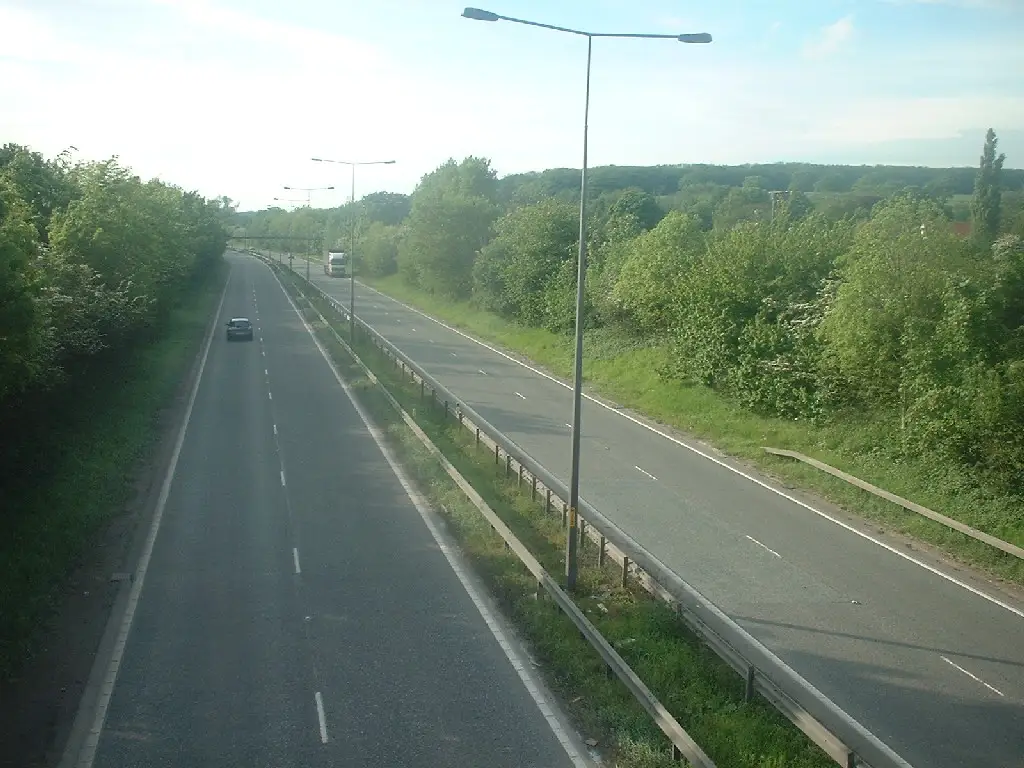
Dual carriageways account for a significant proportion of serious road casualties. The combination of high speeds, multiple lanes, and traffic joining and leaving at speed creates an environment that new drivers rarely encounter during lessons — yet they appear on many daily routes almost immediately after passing.
The key difference from a motorway: dual carriageways have no hard shoulder, can include roundabouts, traffic lights, and pedestrian crossings, and may have a 50 or 60 mph limit rather than 70. They also allow cyclists, mopeds, and farm vehicles — none of which are permitted on motorways.
What Makes a Dual Carriageway
A dual carriageway has two separate carriageways divided by a central reservation — a physical barrier, kerb, or hatched markings that separate traffic travelling in opposite directions. Each carriageway typically has two or more lanes.
Speed limit
The national speed limit on a dual carriageway is 70 mph for cars. Many are restricted to 50 or 60 mph — always check the signs. The same national speed limit sign (white circle, diagonal stripe) that means 60 mph on a single carriageway means 70 mph on a dual carriageway.
How to identify one
The central reservation is the defining feature. Dual carriageway signs are a blue rectangle with two white lines representing the two carriageways. On approach, a sign will typically confirm when you are entering a dual carriageway section.
Joining a Dual Carriageway
Unlike motorways, dual carriageways do not always have a proper slip road. Some have a short acceleration lane; others require you to give way or stop at a roundabout or junction before joining. The approach varies — read the road ahead and adapt.
With an acceleration lane
- ✓Build speed in the acceleration lane to match traffic already on the carriageway
- ✓Check mirrors and blind spot — signal right before moving into the left lane
- ✓Do not stop in the acceleration lane unless traffic makes it unavoidable
- ✓Merge at the end of the lane if no gap appears — do not force your way in
Without an acceleration lane
- ✓Wait for a safe gap before pulling out — you may need to stop and wait
- ✓High-speed traffic requires a much larger gap than you are used to from town junctions
- ✓Once you go, accelerate firmly up to the speed of traffic
- ✓Signal and check your blind spot before moving to the right lane if necessary
Lane Discipline
The Highway Code is clear: keep left unless overtaking. The right lane on a dual carriageway is an overtaking lane — not a cruising lane. Middle-lane hogging (staying in the right lane when the left is clear) is a specific offence and can result in a fixed penalty notice.
Left lane — your default
When not overtaking, you should be in the left lane. Return to it after every overtake. This applies even if you are travelling at the speed limit — if traffic ahead is moving freely, there is no reason to stay right.
Right lane — overtaking only
Move to the right lane to overtake, complete the overtake, then return to the left lane. Signal each move. Check mirrors and blind spot before moving right and again before returning left.
Three-lane dual carriageways
Some dual carriageways have three lanes. The same principle applies: keep left unless overtaking. Use the middle lane to overtake left-lane traffic, and the right lane only to overtake middle-lane traffic. Do not use the right lane to overtake when the middle lane would do.
Overtaking at Speed
Overtaking at 60–70 mph feels very different from anything on the driving test. The speed differential between you and the vehicle you are overtaking may be small, the relative speed of oncoming carriageway traffic creates a psychological pressure, and the whole sequence happens faster than expected.
Before moving right
- ✓Check centre mirror, right mirror, and right blind spot
- ✓Signal right — give traffic behind time to react
- ✓Move smoothly into the right lane and accelerate past
- ✓Do not sit alongside the vehicle — complete the pass decisively
Returning left
- ✓Check centre and left mirrors — confirm the overtaken vehicle is visible
- ✓Signal left and return to the left lane smoothly
- ✓Do not cut in sharply — leave enough space in front of the vehicle you have passed
- ✓Cancel your signal once back in lane
Leaving a Dual Carriageway
Exits can appear quickly at dual carriageway speeds. Missing your exit and having to turn around is far safer than braking sharply or crossing lanes at the last moment.
At a junction or roundabout
- ✓Move to the left lane well in advance of your exit — not at the last moment
- ✓Signal left in good time so drivers behind know you are exiting
- ✓Begin braking after you have moved to the left lane, not before
- ✓Watch your speed — after sustained dual carriageway driving, 30 mph feels much slower than it is
Speed adjustment
One of the most common mistakes after leaving a dual carriageway is carrying too much speed into a lower-limit road. After 10 minutes at 70 mph, your perception of speed recalibrates — check your speedometer actively when you leave, especially approaching a 30 or 40 mph zone.
If You Break Down
Dual carriageways have no hard shoulder. If you have a problem, get to the nearest layby, service area, or side road if at all possible. If your vehicle stops on the carriageway, put on your hazard lights, get all occupants out of the car and behind the barrier if there is one, and call for help. Never stand on the carriageway.
Tyre blowout at speed
A tyre blowout at dual carriageway speed is alarming but manageable. Hold the steering wheel firmly with both hands, ease off the accelerator gradually, and allow the car to slow without braking harshly. Steer gently to the left and only brake softly once speed has reduced. Do not panic and do not oversteer.
Related Guides
Motorway Driving for New Drivers
Most new drivers find motorways daunting. This guide covers lane discipline, safe following distances, joining and leaving, smart motorways, and what to do if something goes wrong.
Rural Roads Guide
Country lanes, national speed limit roads, farm vehicles, animals, blind bends, and passing places — rural roads are where new drivers are most likely to be caught out.
Night Driving & Bad Weather
Driving after dark and in poor weather are the biggest challenges new drivers face. Headlights, stopping distances, fog, ice, aquaplaning, and how electric cars behave in cold conditions.
Ready to get started?
Automatic electric driving lessons on the Wirral — one-to-one with a qualified ADI.
Book a Lesson